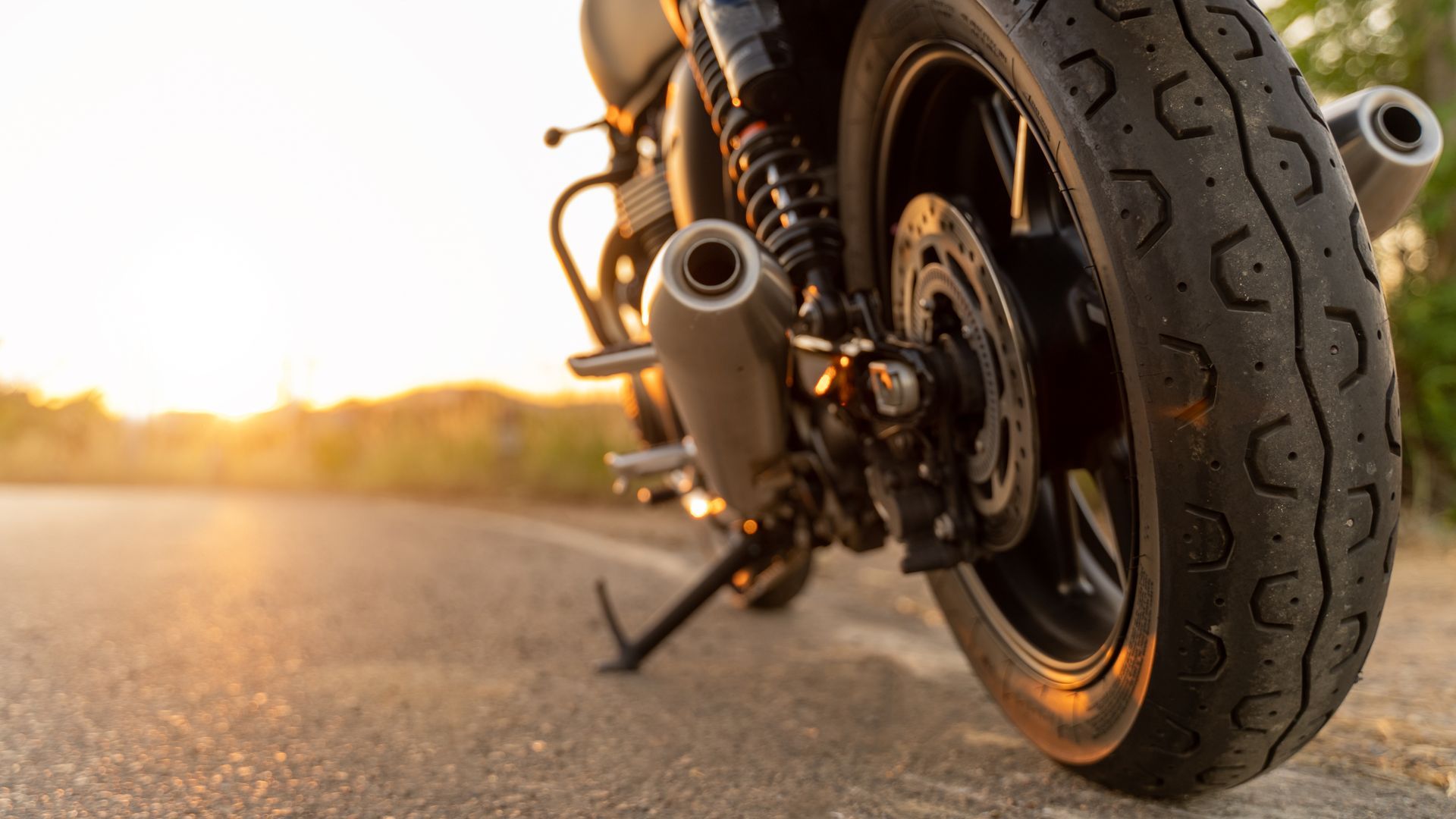
Motorcycle tires and car tires both wear with mileage and age, but they do not live the same kind of life. A motorcycle puts much more responsibility on two small contact patches, and tire condition directly affects braking, cornering, and stability.
That is why we pay closer attention to motorcycle tires than many drivers do with a car. Tread depth still matters, but so do tire age, shape, heat cycles, pressure history, and how the bike is ridden. A tire can still have visible tread and be well past the point where we are comfortable trusting it.
Motorcycle Tires Usually Wear Out Sooner
Most motorcycle tires do not last as many miles as passenger-car tires. The rubber compounds are generally designed to provide strong grip rather than maximum tread life, and the tire has to handle acceleration, braking, and cornering through a much smaller footprint.
Rear motorcycle tires normally wear faster than fronts because they transmit engine power to the road. On a powerful bike, a rear tire can disappear surprisingly quickly. Touring motorcycles tend to get more mileage than aggressive sport bikes, but riding style makes a major difference.
Car tires spread the workload across four corners and often use harder compounds built for longer service. That is why comparing motorcycle mileage directly with a car tire interval does not tell you much.
Tread Depth Is Only Part of the Decision
A motorcycle tire does not need to be completely bald before it becomes a poor choice for continued use. As the center wears flat, the profile changes and the bike can feel different when leaning into a turn.
We also look closely at the grooves and shoulders. Cracking, exposed cords, cuts, puncture damage, uneven wear, or chunks missing from the tread are clear reasons to stop treating the tire as usable.
Some signs we take seriously include:
- A flattened center section
- Visible cracking between tread blocks
- Uneven or stepped wear
- Cuts deep enough to expose casing material
- Bulges or distorted sidewalls
- Tread worn to the wear indicators
On a motorcycle, there is little benefit in trying to squeeze the last few miles out of a questionable tire.
Age Can Retire a Tire Before the Tread Does
Low-mileage motorcycles create a different problem. A bike that only gets ridden on weekends can keep the same tires for years because the tread wears slowly.
Rubber still ages while the motorcycle sits. Heat, sunlight, ozone, storage conditions, and repeated temperature changes gradually harden the tire. Older rubber does not flex and grip the same way fresh rubber does, especially in cooler weather or wet conditions.
We check the date code on the sidewall when the tire's age is unclear. No single age number replaces inspection and manufacturer guidance, but an older tire deserves more scrutiny even if the tread looks good.
Tire Pressure Changes Motorcycle Wear Quickly
Running incorrect pressure can ruin a motorcycle tire long before its normal replacement point. Too little pressure creates extra heat and flex in the carcass. Too much pressure can reduce the size and behavior of the contact patch.
Motorcycles also tend to show pressure-related wear more clearly because the tire profile is so important to handling. A rear tire that has spent thousands of miles underinflated can develop an odd shape that changes how the bike enters and holds a corner.
We recommend checking pressure regularly when the tires are cold and using the motorcycle manufacturer's specification as the starting point. Regular maintenance here takes only a few minutes and can add useful tire life while keeping the bike more predictable.
How You Ride Has a Huge Effect on Tire Life
Two riders on the same motorcycle can get very different mileage from the same tire.
Hard acceleration wears the rear quickly. Heavy braking works the front. Aggressive cornering uses more of the shoulders, while long highway rides tend to flatten the center. Carrying a passenger or luggage also increases the load and heat the tires have to handle.
The road surface plays an important part as well. Coarse pavement can eat through soft rubber much faster than smoother roads. If you ride hard, tour heavily loaded, or spend a lot of time on rough pavement, expecting maximum advertised mileage is unrealistic.
Motorcycle Tires Need Closer Attention Than Car Tires
A car can sometimes hide a tire problem surprisingly well because three other tires still support and control the vehicle. A motorcycle gives you far less margin.
A tire losing pressure, separating internally, or wearing into a poor profile can change the way the bike steers and holds a line. That is why we take vibration, wobble, unusual steering effort, or a sudden change in handling seriously.
During an inspection, we check tread, sidewalls, pressure, valve stems, wheel condition, and the tire's overall shape. If something looks wrong, we want to know why before sending the bike back onto the road.
Replace Based on Condition, Not a Car-Style Mileage Expectation
There is no useful rule that says motorcycle tires should last a certain percentage as long as car tires. Different bikes, tire compounds, loads, and riding styles make that comparison too broad.
A better approach is to check them frequently and track how they wear. If the tread is low, the rubber is aged, the profile is badly squared off, or the tire is damaged, replacement makes sense even if you expected more mileage.
Motorcycle tires are one of the few parts of the bike that directly connect every braking and steering input to the road. We do not recommend stretching their service life once their condition starts working against the rider.
Get Motorcycle Tire Service In Waldorf, MD, With RAS Auto & Cycle
If your motorcycle tires are wearing unevenly, getting old, losing pressure, or changing the way the bike feels, RAS Auto & Cycle in Waldorf, MD, can check their condition and help you decide whether they are still safe to run.
Schedule a tire check before worn or aged rubber starts affecting the way your motorcycle handles.